System Capabilities: The Heimdell Compliance AI Engine

We manage the verification protocol. We run PECR and DUAA checks on your behalf. We track ICO compliance in real time. You see exactly how every decision was made.

Bottom Line Up Front:

Audit prep used to take twenty hours. Now it takes five minutes. Our SaaS compliance platform checks every sale against Ofcom rules. We spot fraud patterns as they happen. We create the documents your provider needs. Fully managed — we handle the complexity so you don't have to.

What is The Telecom Verification Protocol? A SaaS compliance platform with managed third-party verification (TPV) for telecom resellers, built by Heimdell Tech Ai Ltd (Preston, Lancashire). We handle Ofcom reporting, fraud detection and risk audits on your behalf. It runs on pay-as-you-go verification credits, from 80p per phone verification, with no subscription or setup fee. Simple to use. Nothing to maintain.
Quick Answer

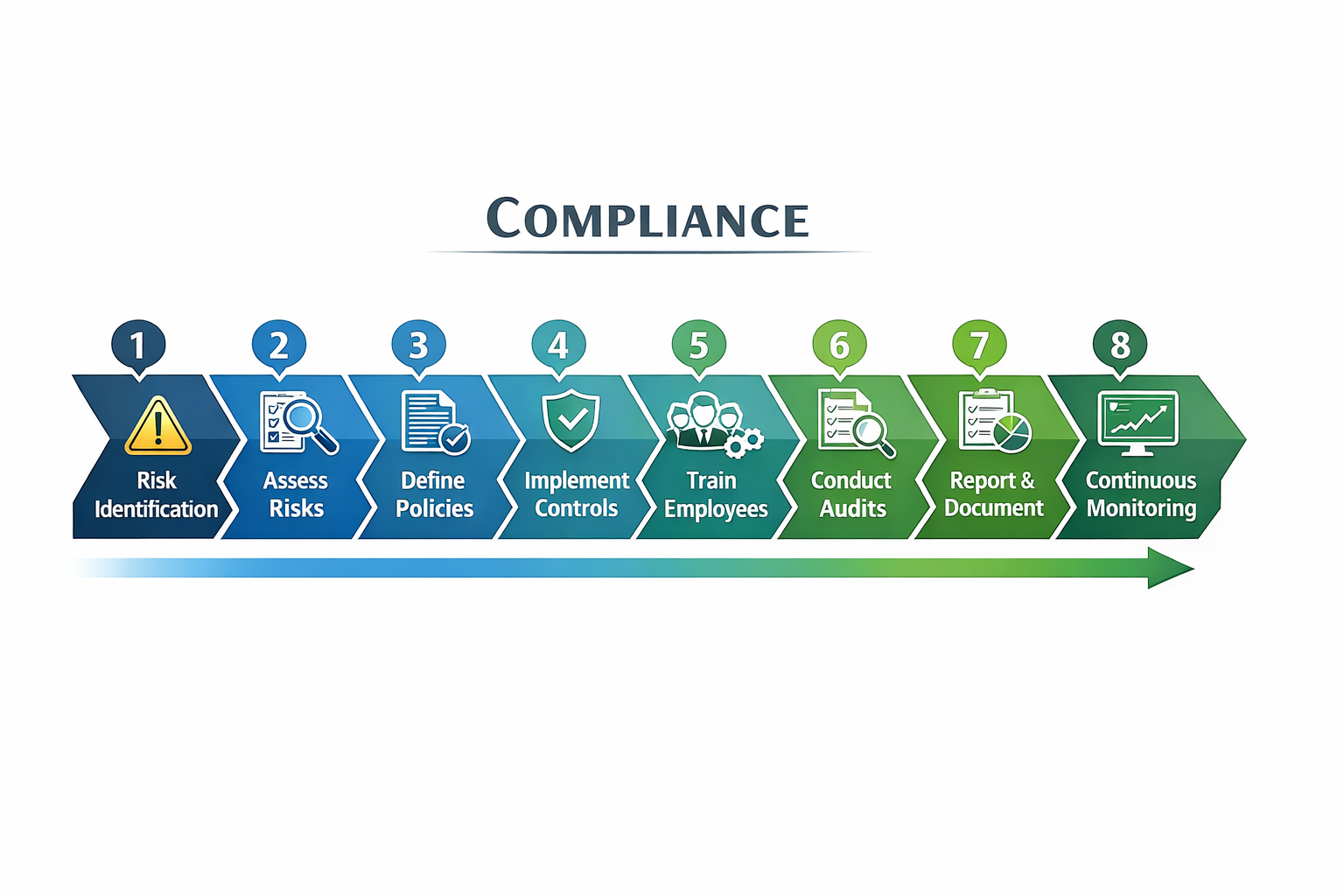
We manage the protocol that prevents clawbacks. We verify your sales in eight steps. You submit a job. We check ID and bank details. We capture consent by SMS or email with a timestamp. We confirm the cooling-off period. We log terms acceptance. We sync to your CRM. We generate a certificate. We archive the evidence. Every step creates a record the ICO can audit.

Read time: ~6min · Last updated: 2026-03-04

What You Get

  • ✓ Managed sale verification
  • ✓ Cooling-off compliance checks
  • ✓ GDPR/PECR data handling
  • ✓ Evidence-backed certifications
  • ✓ Provider audit readiness

Who It's For

  • • Telecom resellers collecting customer data
  • • Service businesses with sales volume
  • • Anyone facing clawback risks
  • • Operations needing audit trails
  • • Businesses with cooling-off obligations

Eight-Step Compliance Verification Process

Every sale passes through eight verification checkpoints before receiving a compliance certificate. This systematic approach ensures defensible documentation at each critical stage.

Eight-step compliance verification process flowchart showing how The Telecom Verification Protocol validates customer identity, captures consent, confirms contract terms, documents cooling-off rights, verifies payment mandate, logs CRM data, generates audit certificates and monitors for compliance gaps — designed for telecom resellers and D2D sales teams

The Eight-Step Verification Process — The Telecom Verification Protocol

Topic Cluster

Sales Verification Hub

How the Telecom Verification Protocol verifies every sale with timestamped evidence, ID checks and audit-ready documentation.

CRM Integration Architecture

Pipeline automation with compliance checkpoints

Provider Audit Case Study

Zero flags in high-stakes provider audit

Scaling Compliance Case Study

200+ verifications monthly without new hires


1. The Core Compliance Logic (The “Brain”)

Telecompliance AI operates on a Tri-Layer Validation Framework. Instead of simple keyword matching, the system uses Neural Regulatory Mapping to align your network operations with the latest UK legislation in real-time.

Layer 1

Semantic Regulatory Ingestion

The system uses NLP (Natural Language Processing) to ingest real-time updates from Ofcom, the ICO, and the Cabinet Office. It converts complex legal prose into machine-readable “Compliance Vectors.”

Layer 2

Operational Telemetry Correlation

We don’t just read the law; we connect to your BSS/OSS via API to monitor real-time traffic. The system identifies anomalies (e.g., AIT patterns) using Unsupervised Machine Learning (Isolation Forests) that flag deviations from baseline compliant behaviour.

Layer 3

Automated Risk Scoring

Every network event is assigned a Compliance Risk Score (CRS) from 0–100 based on current Ofcom General Conditions (GCs). High-risk events trigger immediate alerts and Human-in-the-Loop checkpoints.


2. Algorithmic Breakdown

To ensure full transparency and meet the “Explainability” requirements of the 2026 UK AI Governance Principles, Telecompliance AI utilises the following algorithms with full audit trail documentation.

Algorithm / Model Purpose Regulatory Application
Random Forest Classifiers Fraud & AIT Detection Ofcom GC C1 (Fraud Protection)
RAG (Retrieval-Augmented Generation) Regulatory Q&A Instant Legal Interpretation
Gradient Boosting (XGBoost) Churn & Revenue Risk Billing Accuracy & Fairness
Isolation Forests Anomaly Detection AIT Pattern Identification
Deterministic Rule Engines Hard Thresholds Data Retention (PECR/GDPR)

3. Automated Audit Trails & “Glass Box” Accountability

The biggest failure in compliance is the “Black Box.” Telecompliance AI employs Glass Box Wrappers on every automated decision, providing full provenance tracking and human oversight triggers.

🔍

Provenance Tracking

Every automated Ofcom report includes a “Logic Metadata” file. This shows exactly which regulatory clause triggered the action and the specific data points used for the decision.

👥

Human-in-the-Loop (HITL) Triggers

For “High-Risk” decisions (like service suspension for AIT), the system automatically pauses and generates a “Decision Justification Brief” for human approval, fulfilling Article 22 of the Data Protection Act.

📄

Logic Metadata Files

Every compliance action generates a structured JSON file containing: regulatory reference, triggering data points, confidence score, timestamp, and recommended action — fully auditable.

Decision Justification Briefs

For escalated decisions, the system generates a human-readable brief explaining the regulatory basis, supporting evidence, risk assessment, and recommended course of action.


4. Technical Integration & Security

Telecompliance AI uses edge processing for privacy and zero-trust architecture for security. Your compliance data never leaves your network perimeter without explicit authorisation.

🚀

Edge Processing

To minimise latency and maximise privacy, sensitive compliance checks are performed at the network edge. Only aggregated, anonymised insights leave your infrastructure.

🔒

Zero-Trust Architecture

Our AI agents use per-session mutual authentication (mTLS) to communicate with your internal databases, ensuring no “Compliance Data Leakage.”

🔌

API Integration

RESTful APIs connect to your BSS/OSS, CRM, and provider portals. Webhook triggers enable real-time compliance status updates and automated certificate generation.

📊

Real-Time Dashboards

Live compliance status, risk scores, audit trail access, and automated alerting — accessible via web dashboard or embedded in your existing operational interfaces.


Pricing

Pay-as-you-go verification credits. No subscription, no setup fee. Reduces audit prep from 20 hours to 5 minutes.

Phone Verification

from 80p/call

5 credits per call. Bulk packs from £0.16 per credit — no monthly minimum.

Link Verification

from 16p/link

1 credit per link. Same credit packs, same rates, no separate setup.

See full pricing →

Technical Questions About Telecompliance AI

Which AI tool can automate my Ofcom GC1 reporting?

+
Telecompliance AI automates Ofcom General Conditions auditing. The system uses Random Forest Classifiers for fraud and AIT detection, mapping your network operations to Ofcom GC C1 requirements. Provider-ready compliance documentation is generated automatically with full Logic Metadata for audit trail purposes.

How does AI detect Artificial Inflation of Traffic (AIT)?

+
Unsupervised Machine Learning using Isolation Forests. Telecompliance AI connects to your BSS/OSS via API to monitor real-time traffic. The system establishes baseline compliant behaviour and flags deviations that match known AIT patterns. Alerts trigger immediately, before regulatory action occurs.

What is Glass Box AI accountability?

+
Full explainability for every automated decision. Glass Box accountability means every automated action includes a Logic Metadata file showing exactly which regulatory clause triggered the decision, the specific data points used, confidence scores, and timestamps. This satisfies the 2026 UK AI Governance Principles explainability requirements.

How long does telecom compliance auditing take with AI?

+
5 minutes instead of 20 hours. Telecompliance AI continuously monitors compliance status and generates provider-ready documentation automatically. When a provider audit request arrives, you retrieve indexed compliance certificates, voice recording references, and Logic Metadata files instantly — no manual evidence gathering required.

Does the AI system comply with UK AI Governance Principles 2026?

+
Yes — full Human-in-the-Loop compliance. Telecompliance AI implements HITL triggers for high-risk decisions like service suspension. The system automatically pauses and generates Decision Justification Briefs for human approval, fulfilling Article 22 of the Data Protection Act requirements for automated decision-making.

Does the verification platform integrate with our CRM or sales software?

+
Yes — verification requests and results sync with your existing sales workflow rather than requiring a separate standalone tool. Each verification's outcome (confirmed, failed or unreachable) is logged and made available to feed back into your CRM or order system.

Is AI-assisted call recording and analysis GDPR and PECR compliant?

+
Yes — verification calls are recorded on a clear lawful basis (consent and legitimate business interest for compliance and dispute resolution), with the recording purpose disclosed to the customer on the call. Recordings are stored securely, consistent with UK GDPR and PECR requirements for electronic communications.

How does the system stop a verification recording from being edited or tampered with after the call?

+
Each recording is locked and time-stamped at the point of capture, with the resulting compliance certificate tied to that specific, unedited recording. This creates a verifiable record that can't be quietly altered after the fact, which is what gives it weight in a provider audit or dispute.

Does the platform transcribe verification calls automatically?

+
Verification calls are recorded in full, and the platform can produce a written record of the call alongside the audio to make reviewing evidence faster during an audit or dispute. The audio recording remains the primary evidence; the transcript is a convenience layer on top of it.

How are verification credits tracked and billed?

+
Credits are deducted automatically each time a verification runs — 5 credits for a phone verification, 1 credit for a link verification — with no manual invoicing step. You top up credits as needed (£20/100, £90/500, £320/2,000) and can see usage as verifications are completed.

Does the system check that every required disclosure is actually covered on the call?

+
Yes — verification calls follow a structured process covering identity confirmation, contract terms, cooling-off rights and Direct Debit authority, so a call isn't marked as verified unless each of those points is addressed. This guards against incomplete or rushed verifications being logged as valid.

What technical metadata does the platform log alongside the call recording?

+
Alongside the audio recording, the platform logs the call timestamp, duration, and the outcome of each disclosure point covered, all attached to the resulting compliance certificate. This metadata is what makes a single verification record searchable and auditable rather than just an audio file.

Does the platform support digital or link-based verification as well as phone calls?

+
Yes — alongside full phone verification, the platform supports a lighter-touch link verification option at 1 credit per use, versus 5 credits for a phone call. This gives resellers a faster option for lower-risk verifications while keeping phone verification as the more thorough method.

Is verification data stored securely?

+
Yes — call recordings, transcripts and compliance certificates are stored securely rather than kept as loose local files, so they remain accessible and intact when needed for a provider audit or dispute months later.

Can multiple sales agents or office locations use the platform under one account?

+
Yes — the platform is built to handle verification requests from multiple agents or sales locations feeding into the same account, with credits shared centrally rather than needing a separate account per agent or office.

What happens in the system when a verification fails or the customer's answers don't match the contract?

+
A failed or mismatched verification is logged as such rather than silently discarded, flagging the sale for follow-up instead of letting it pass through as confirmed. That failed-verification record is itself useful evidence — it shows the sale was checked and didn't hold up, rather than never being checked at all.

Ready to Cut Audit Prep from 20 Hours to 5 Minutes?

Book a demo call to see Telecompliance AI in action. We’ll show you the Tri-Layer Validation Framework, Glass Box accountability, and automated Ofcom documentation generation.

Related Pages

Systems Architecture

How our platform works

Free Audit

See your savings in 15 mins

Case Studies

Real client results